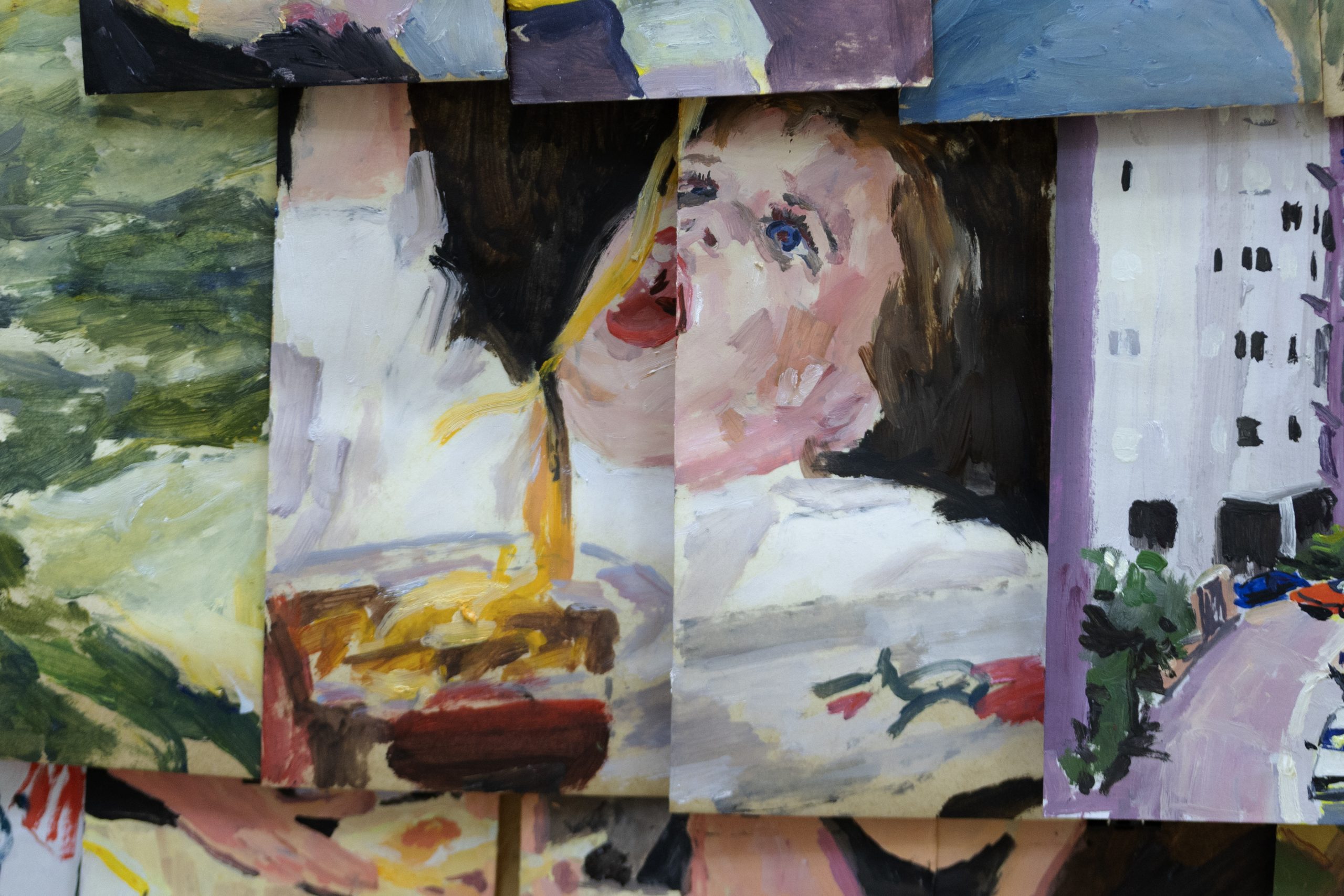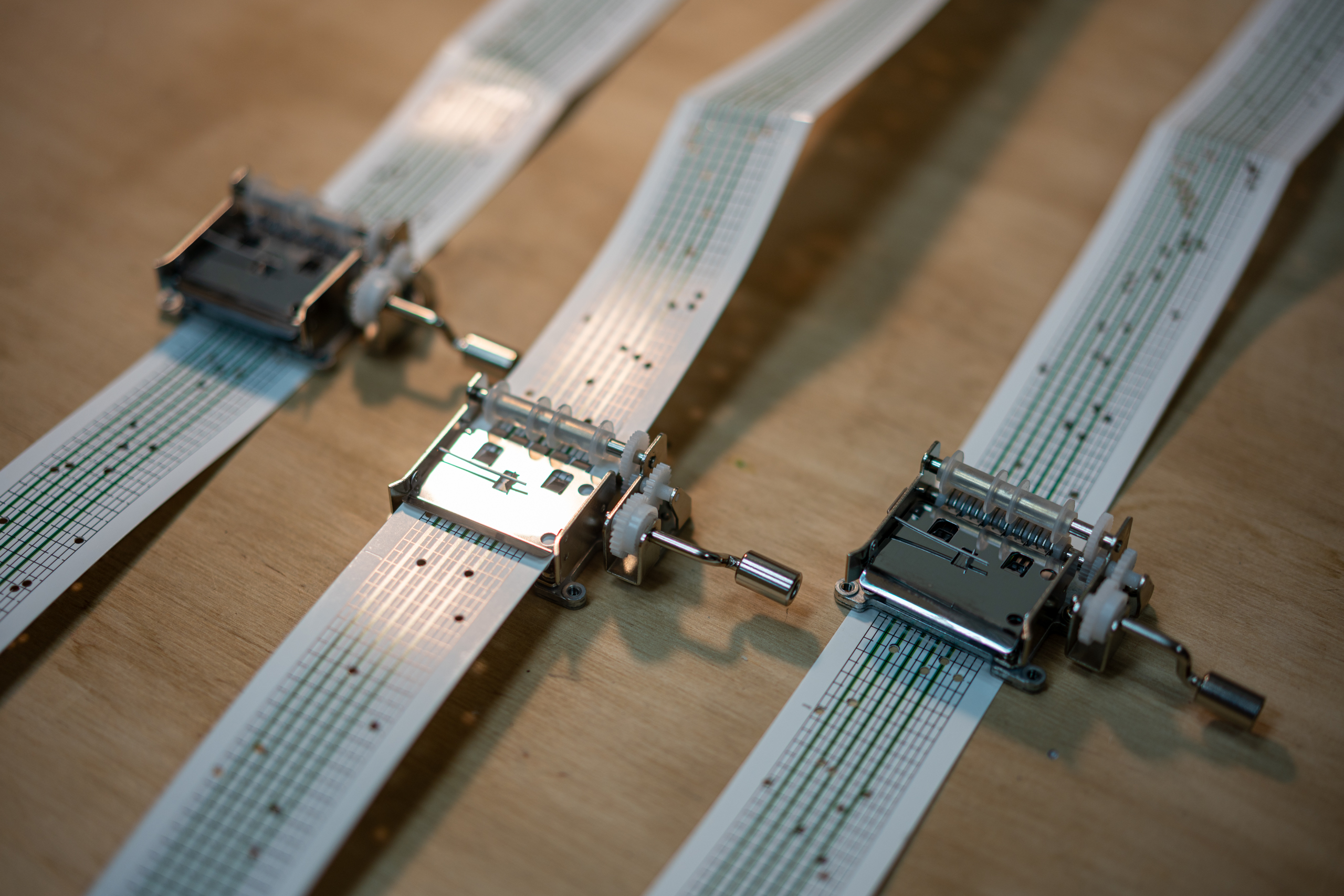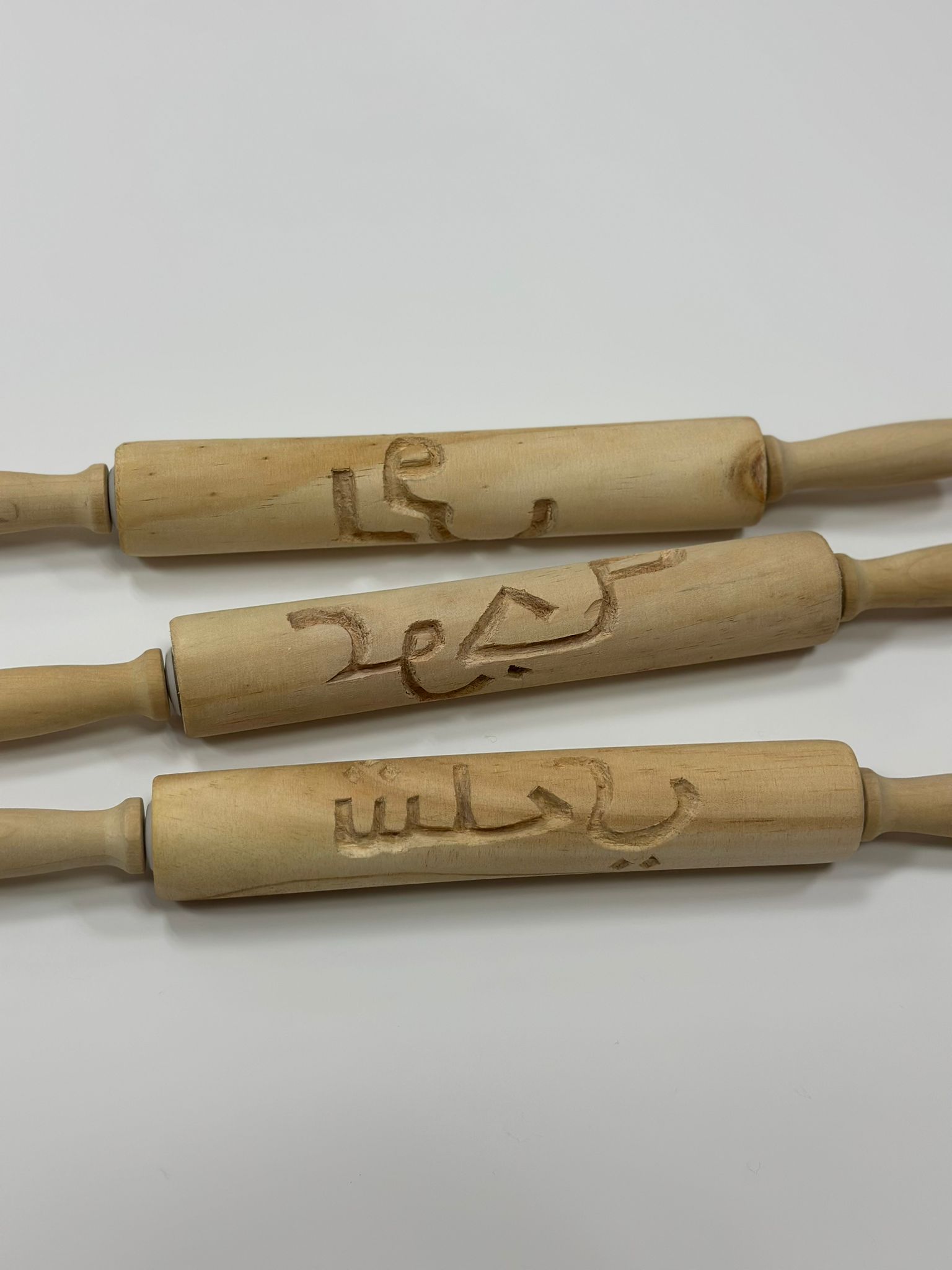
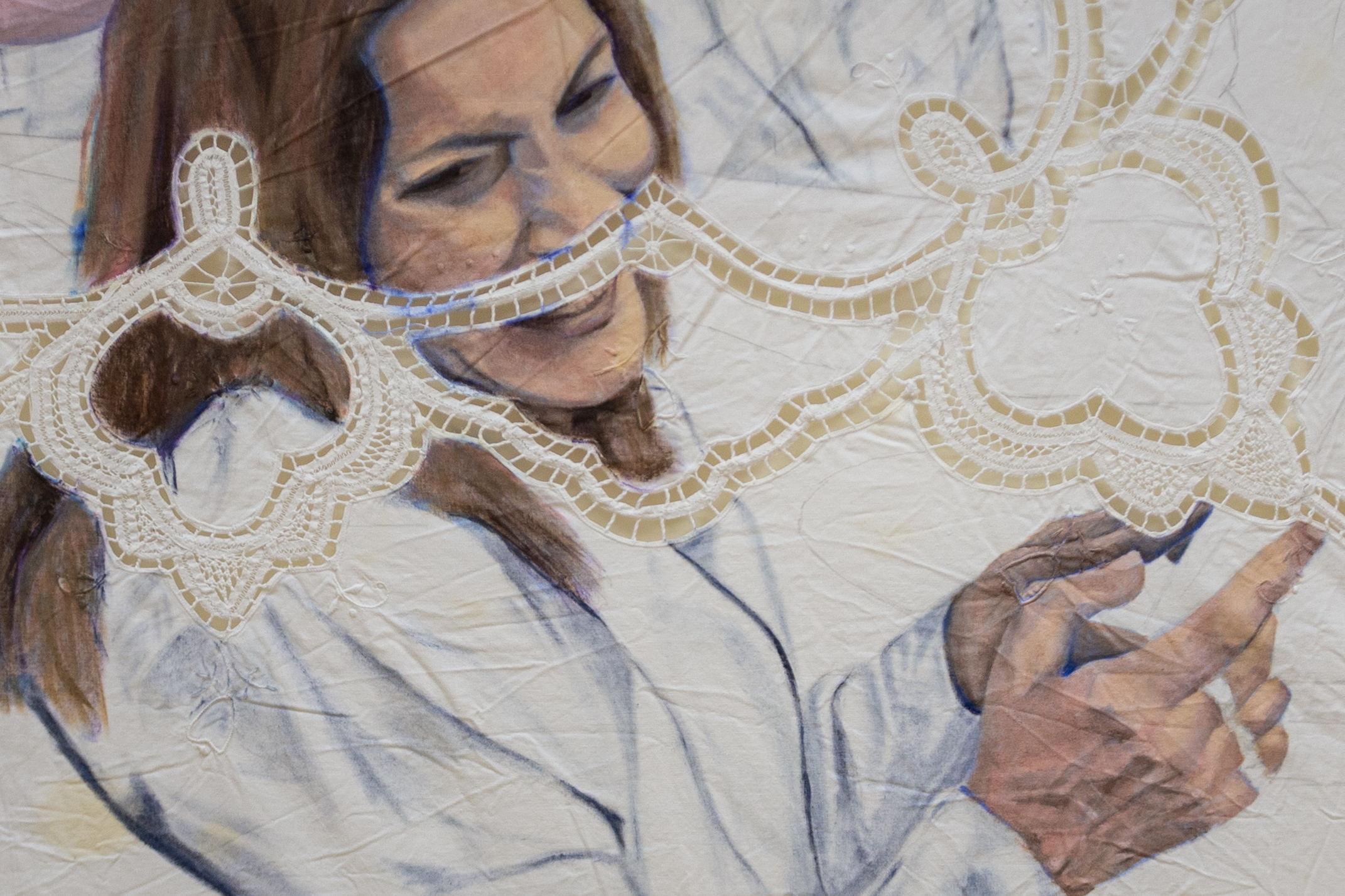
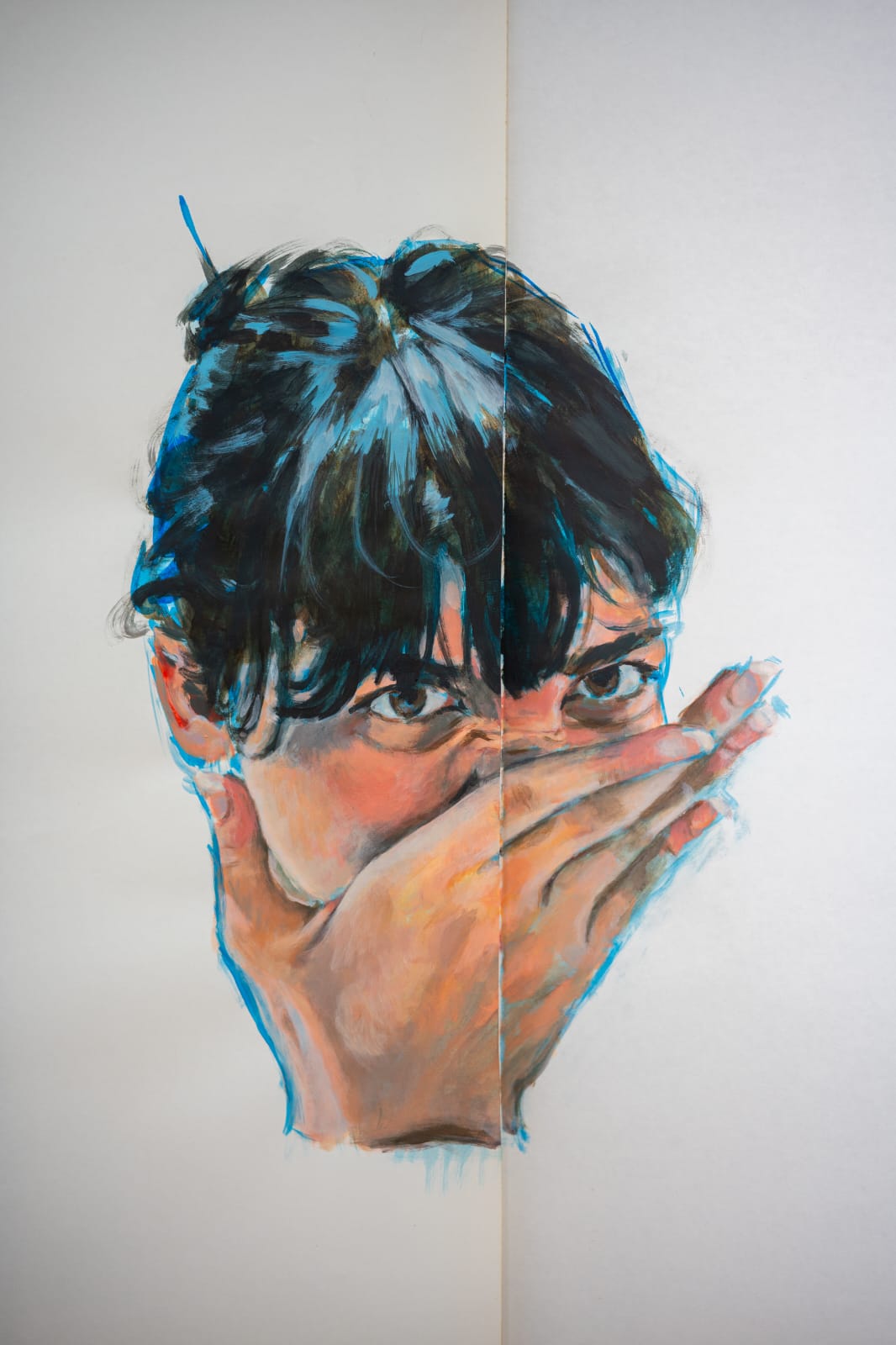
The joint exhibition contains two poles; one is a gaze at the close and intimate, for instance a family journey from North Africa through France to Israel, drawn on a tablecloth, or processing a traumatic violent event to form a musical tune played by an analog music box, personal objects from a mother’s kitchen transformed into a wild collage, or painting photographic scenes from the childhood of twins on envelopes.
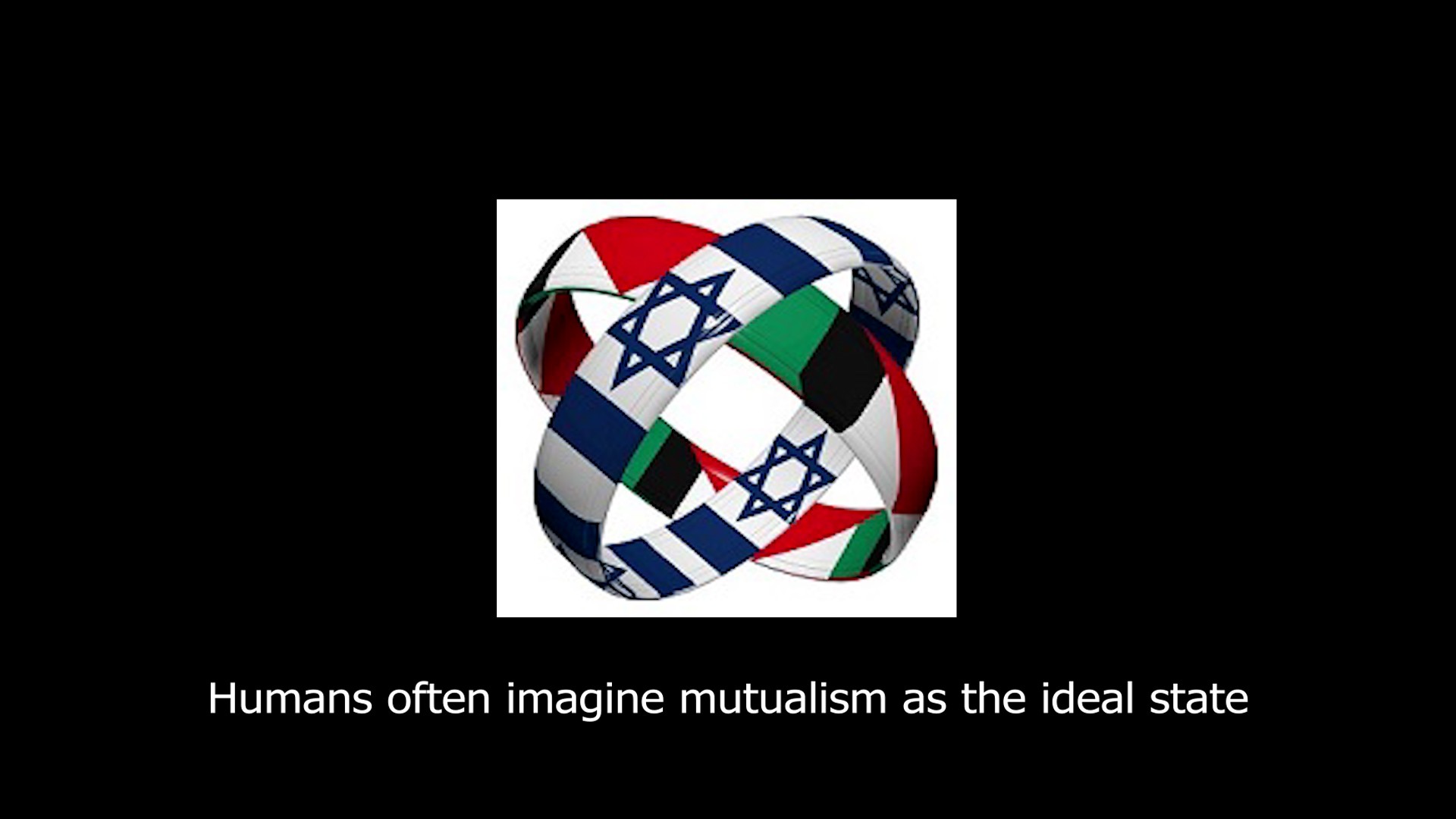
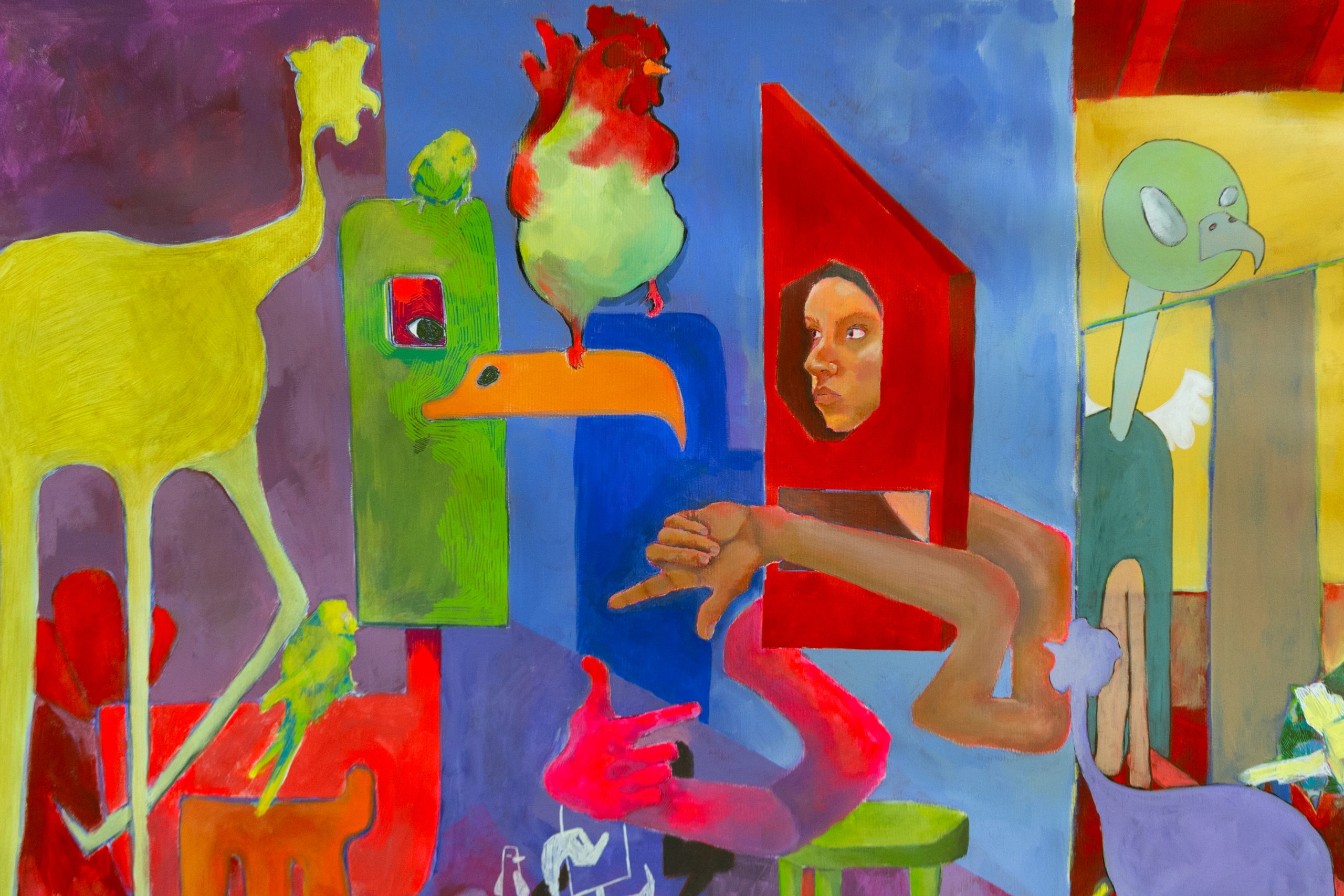
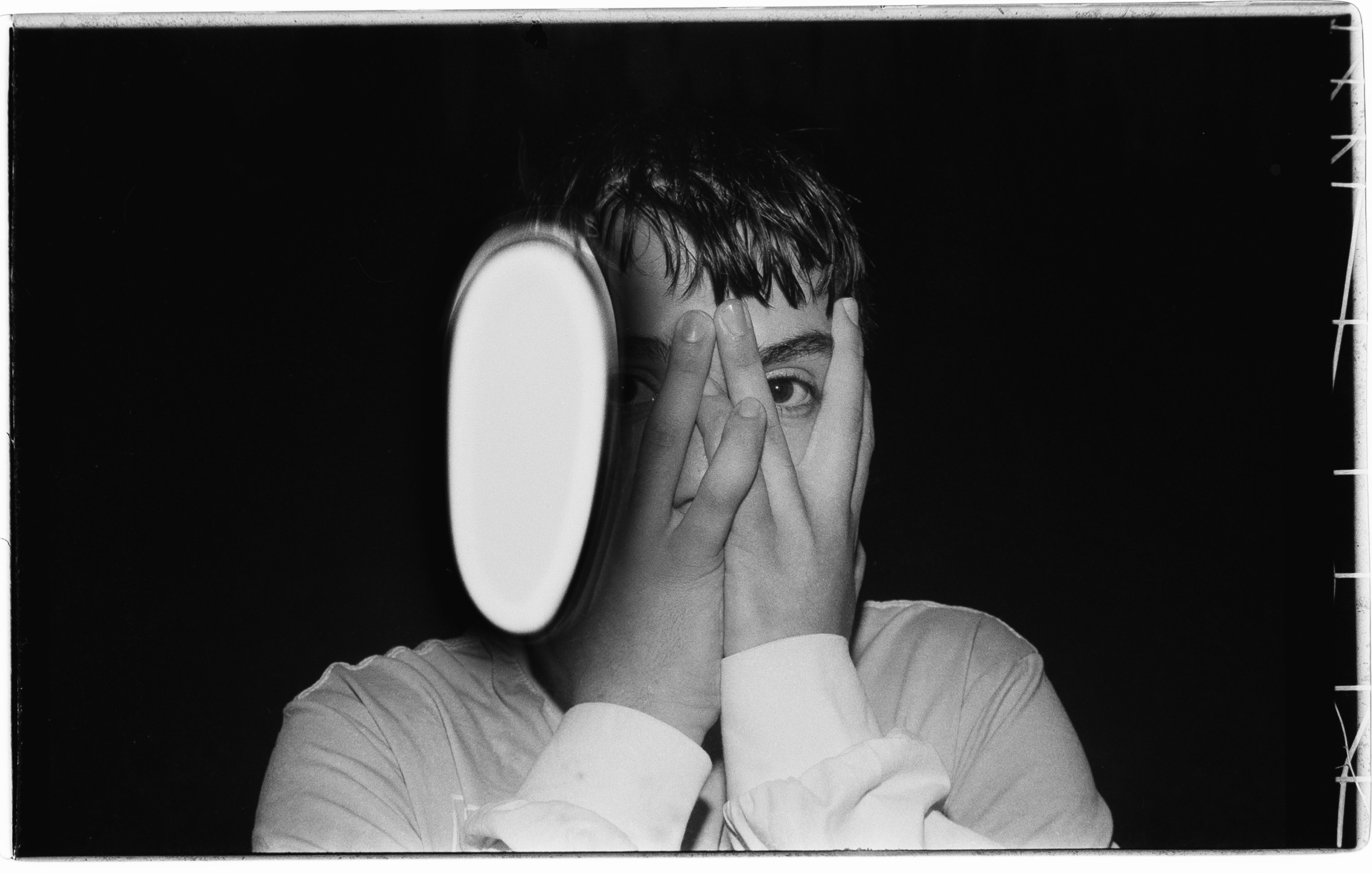
On the other pole, the exhibition directs its gaze outwards to the real-life environment, through photographs of the close local landscape, of an Arab boy from a school operating at Givat Haviva, taken by a Jewish artist, and a view of the more distant landscape, by documenting the space between Jericho and Jerusalem that has become a focus of harassment by hilltop youth, as well as through a nature film as a critical analogy of coexistence in human society, embryonic miniature sculptures, or a giant panoramic painting of an imaginary space where creatures live in different pictorial languages.
In the Givat Haviva residency program the nine artists created, ate, spent time, slept, or in other words lived together 24/7 in the same shared space at Givat Haviva. The artists come from different geographical places in Israel, coming from Dalyat El-Karmel, Tel Aviv, Haifa, Jerusalem, Arabeh, Nof Hagalil, and Raanana.
Throughout their time in the program, the young artists were accompanied by the program director, an artistic guide, a social facilitator, and a team of mentors consisting of top Israeli artists. The program includes lectures and artist workshops, group encounters and personal meetings with different facilitators, with the aim of exposing them to a variety of outlooks and work modes. Together, the participants experienced inspirational and discourse tours at art institutions and were exposed to contemporary artistic initiatives. They also led three broad art events for various audiences in the Givat Haviva region, which is a mixed Jewish-Arab area.